> For the complete documentation index, see [llms.txt](https://docs.orderbook.trade/llms.txt). Markdown versions of documentation pages are available by appending `.md` to page URLs; this page is available as [Markdown](https://docs.orderbook.trade/orderbooktrade-litepaper.md).
# OrderbookTrade LitePaper
The Matching Engine & Liquidity Layer for Prediction Markets
### 1. Overview
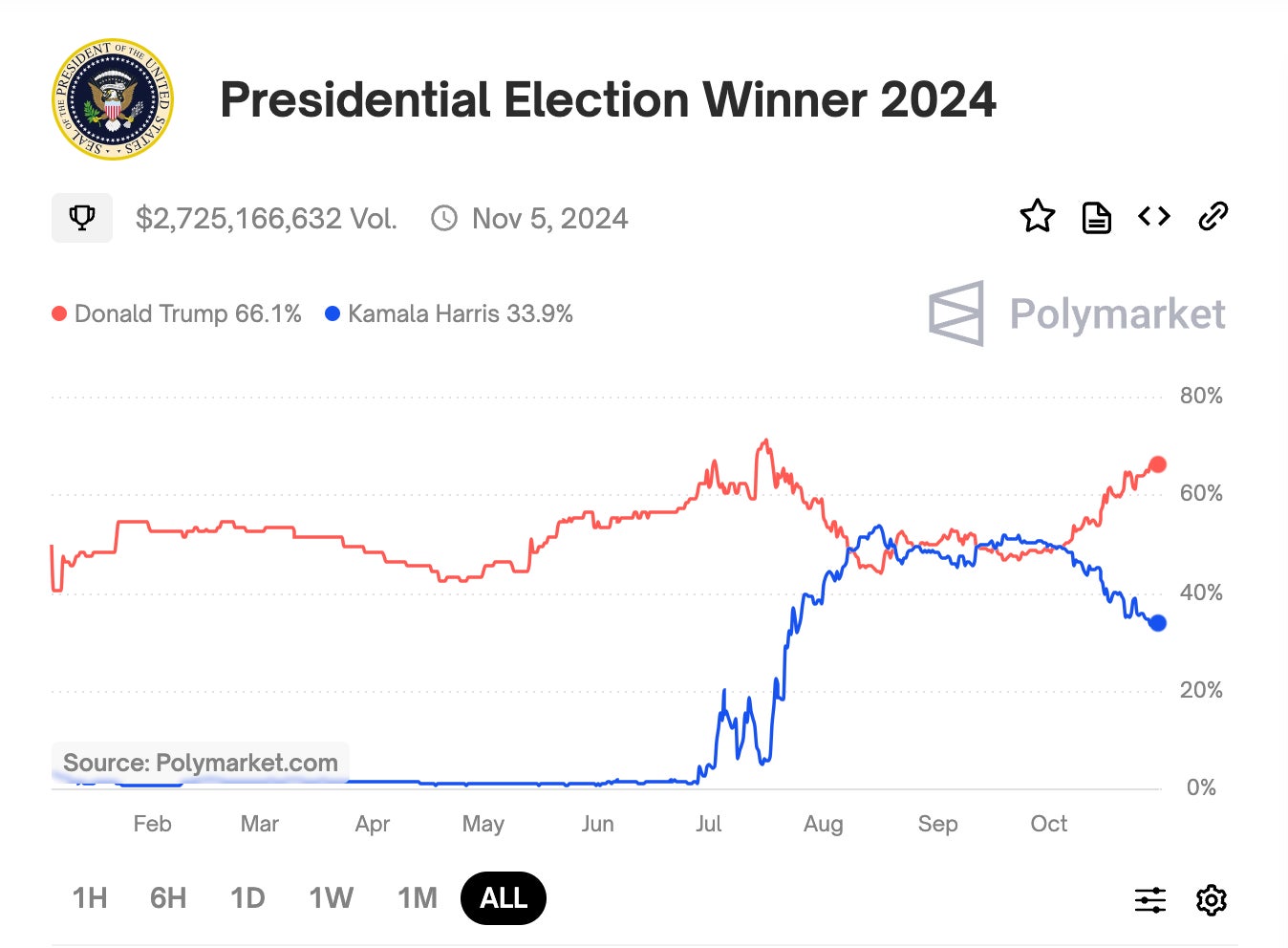
In the last cycle, prediction markets quietly graduated from a niche toy to a piece of real financial infrastructure capable of handling **billions of dollars** in volume.
During the 2024 U.S. presidential election, a single Polymarket (Trump vs. Harris) processed billions of dollars in cumulative trading volume, with every bet and settlement transparently recorded on-chain.
For many, this was the first time it became clear that:
> **Uncertainty itself can be turned into a tradable asset.**
At the same time, the sector exposed a shared weakness:
* There are **many** teams building new prediction products,
* But **very few** platforms with real users, deep liquidity, and CEX-grade execution.
OrderbookTrade is not “yet another prediction platform.”
Instead, it is the **matching engine and liquidity infrastructure behind prediction markets**:
> A plug-and-play infrastructure stack for new L1s, L2s, and prediction projects,
>
> so teams can launch robust, scalable prediction products in **weeks**, not months.
Our mission is simple:
**Make prediction markets a core layer of the internet’s probability markets**
**Make OrderbookTrade the shared matching layer that powers them.**
***
### 2. **Market & Problem**
#### **Bear Markets, Liquidity Crunch, and New Primitives**
We are at the end of 2025, coming out of:
* A sharp drawdown in `1011` and severe short-term liquidity stress
* Repeated U.S. government shutdowns and fiscal tightening—macro “bad news” everywhere
* Depressed secondary markets, slower fundraising, and more conservative token launches
Looking back at previous cycles, a pattern emerges:
* **Post-2018/19 bear:**
Ethereum DeFi, AMMs, and Uniswap emerged as core "financial Legos."
* **Post-2022/23 winter:**
Rollups and L2s came online, and 2024’s Meme wave brought a new user cohort.
* **In 2025:**
Prices retrace, sentiment cools, but **prediction markets & event derivatives** quietly accelerate.
> Historically, the worst markets are often when the most important infrastructure quietly ships.

#### **What’s Broken in Today’s Prediction Markets?**
From our research across \~200+ projects, most prediction platforms share similar pain points:
**For end users**
* **Thin liquidity, shallow books** – even mid-sized orders can move the price aggressively
* **High slippage and slow fills** – UX is far below CEX standards; pros don’t stick around
* **Downtime and degradation during volatility** – exactly when users most want to trade
* **Limited product surface area**
* Most markets are simple yes/no or fixed-odds,
* Lacking leverage, combinatorial markets, conditional markets, and proper risk tools.
**For Prediction product builders / new L1s / infra teams**
* Every team reimplements the same stack:
matching engine, orderbook, clearing logic, monitoring, risk, etc.
* To get “real” performance, you either:
* Go fully centralized, or
* Build your own exchange-grade engine from scratch.
* Cross-chain / multi-chain – every chain needs a fresh integration.
* Compliance, logging, reporting and audit – all reinvented per project.
The result is :
> **Most teams are busy building exchanges, not better prediction products.**
***
### 3. The **rise of Prediction Markets**
The 2024 U.S. election was prediction markets’ first real breakout moment:
* A single market processed **billions in notional volume**
* Every position and settlement was verifiable on-chain
* Media outlets, institutions, and poll trackers began treating prediction prices as a serious signal
**The mental model shift:**
* For retail users:
> “I can express my view on an event with $100, not just bet on sports or meme coins.”
* For institutions and builders:
> “Any uncertain event can be turned into a market and priced in real-time.”
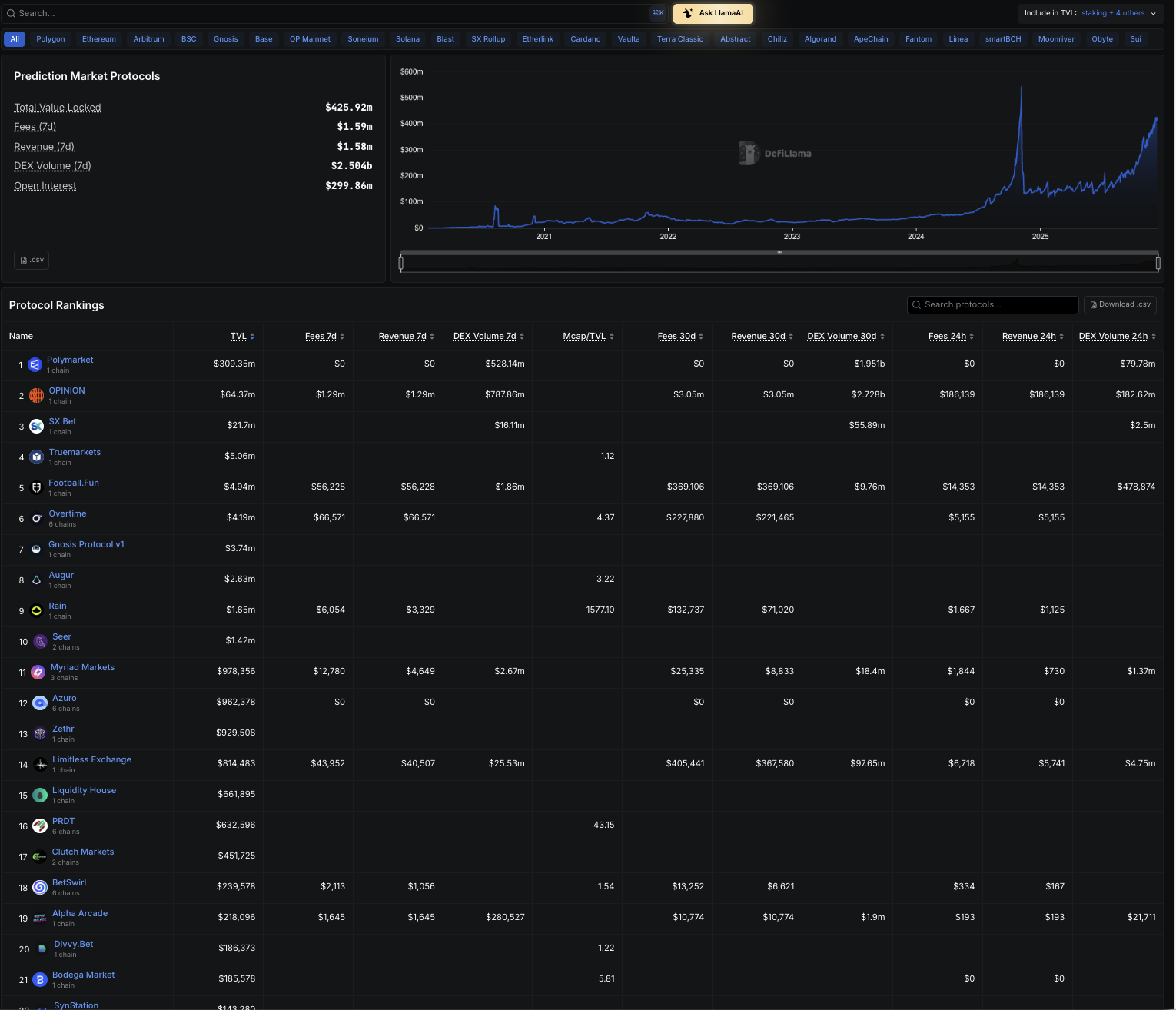
We estimate that **200+ teams** are now building prediction-related products:
* On-chain prediction markets
* Event contracts embedded in CEXs
* “Prediction + social,” “prediction + meme,” “prediction + games,” and more
But the number of platforms with **meaningful, sticky volume and recurring users** is probably **<10**.
***
### 4. The Difference between Prediction / Gambling
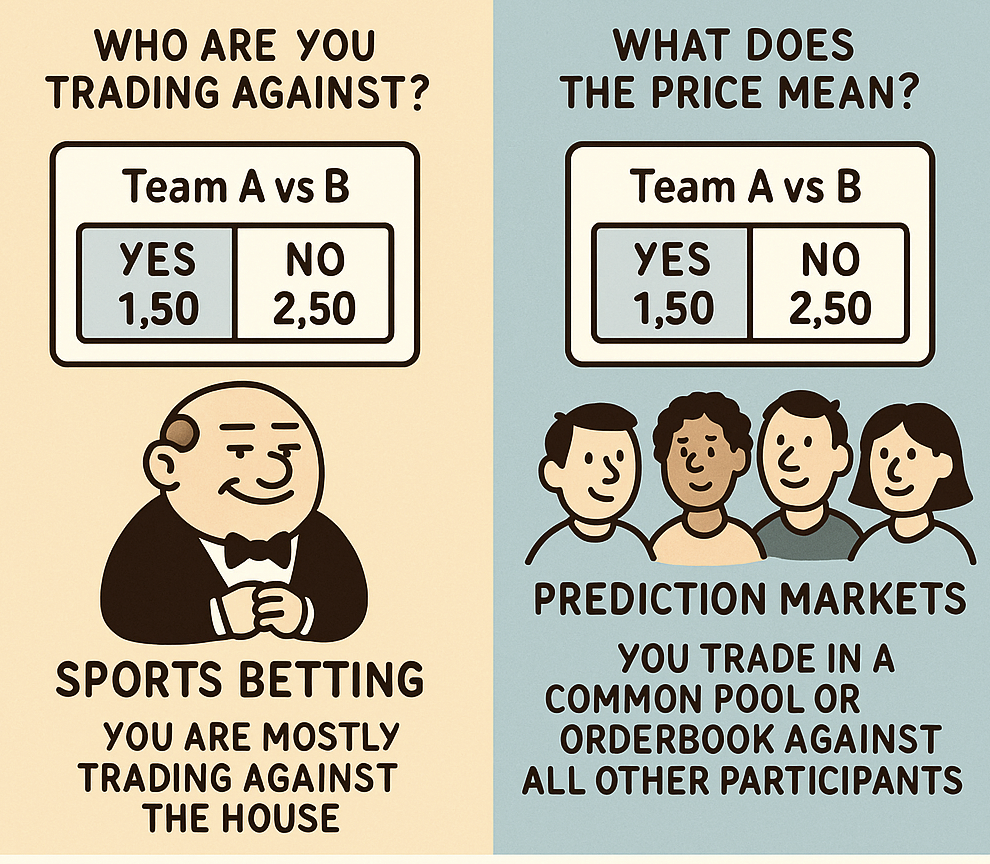
On the surface, the UI looks similar to sportsbooks—yes/no, team A vs team B, fixed odds.
Underneath, there are two crucial differences:
1. **Who are you trading against?**
* Sports betting: you are mostly **trading against the house**.
* Prediction markets: you trade in a common pool or orderbook against **all other participants**.
2. **What does the price mean?**
* Betting odds: capture the bookmaker’s risk model and business objectives.
* Prediction prices: aggregate market participants’ beliefs about the probability of an event.
**In other words:**
> **A well-designed prediction market is a machine that compresses information into prices.**
***
### **5. The OrderbookTrade Solution**
The market **does not need** ten more frontends or a dozen more prediction tokens.
What it needs is **reliable, high-performance infrastructure** that everyone can build on.
OrderbookTrade chooses to sit at this lower layer:
> **We don’t compete for users with our customers.**
>
> **We help them launch better prediction products, faster and safer**
[**OrderbookTrade**](https://www.orderbook.trade/) provides a **purpose-built matching and liquidity layer for prediction markets**, including:
* A high-performance matching engine (targeting 100k+ TPS, millisecond latency)
* Asset and settlement models for yes/no and multi-outcome events
* Risk controls, margin & liquidation logic, limit systems, and audit-ready logs
* APIs, SDKs, and white-label UIs
* Integration patterns for new L1s, L2s, and exchanges
Our Goal :
> Take a team from “idea” to “first production prediction product” in weeks, not quarters.
***
### 6. **Core Architecture**
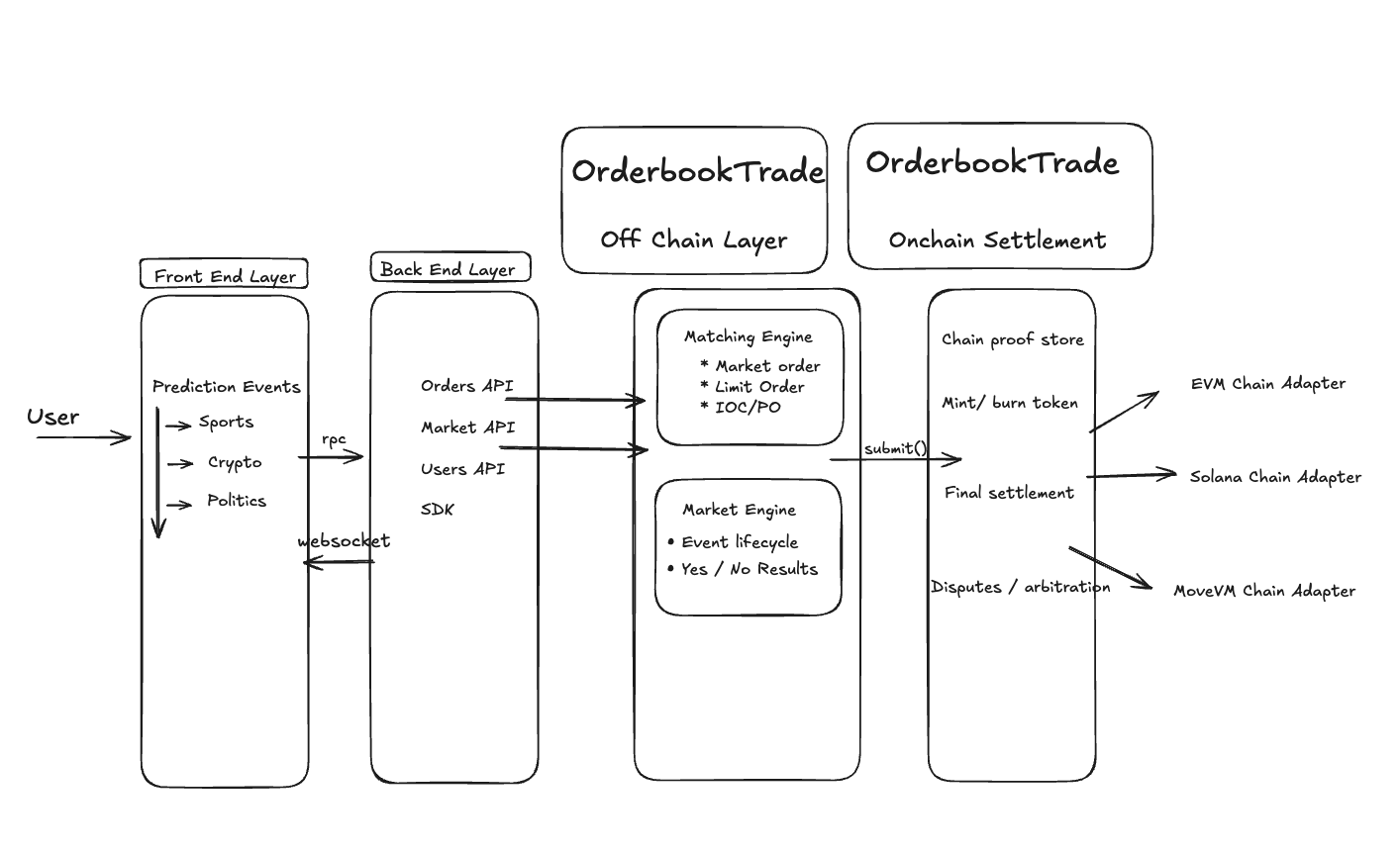
**OrderbookTrade** uses a hybrid model:
**on-chain settlement, off-chain matching**
* **On-chain:**
* Market creation, collateral custody, settlement, and final clearing
* Asset issuance and redemption (yes/no tokens, multi-outcome tokens)
* Governance over key parameters and upgrades
* **Off-chain:**
* High-performance orderbook and matching engine
* Risk checks and real-time risk monitoring
* Streaming market data, order flow analytics, and historical data
**This design offers:**
* CEX-like performance and UX
* On-chain verifiability and auditability of funds and results
* Multi-chain flexibility: a unified API on top, chain-specific adapters below
#### **6.1 Matching Engine**
* Implemented in a high-performance language (e.g. Go / Rust)
* Supports:
* Limit, market, post-only, IOC orders
* Multi-market concurrent matching
* Pre-trade risk checks (balances, margin, exposure limits)
* Provides:
* WebSocket market data feeds
* Trade confirmations and book snapshots
* Fault-tolerance and replay mechanisms
#### **6.2 Market Engine (Event Logic)**
A market engine tailored to prediction use-cases:
* **Binary events (Yes/No)**
* **Multi-outcome events** (candidates, teams, ranges, scenarios)
Supports:
* Event lifecycle management: create → trade → lock → pending resolution → settled
* Market parameterization: tick size, leverage caps, margin requirements
* Exposure tracking: per-event and cross-event risk
#### **6.3. Settlement Layer**
Settlement logic:
* Payout based on resolved outcome
* P\&L attribution and balance updates
* Handling of disputes, delays, and cancellations
#### **6.4. Developer APIs & White-Label Frontends**
* REST and WebSocket APIs
* SDKs in multiple languages (TypeScript, Python, Rust, etc.)
* Ready-to-deploy white-label frontends:
* Generic prediction market interface
* Sports / esports vertical templates
* Politics / macro / crypto events templates
***
### 7. **ICP & Integrations**
#### **Who We Serve**
[OrderbookTrade](https://www.orderbook.trade/) is built for a few core customer profiles:
1. **Vertical prediction product startups**
* Focused on specific verticals: sports, macro, NFTs, esports, social, etc.
* Want to focus on UX, growth, and novel market design instead of infra.
2. **New L1 / L2 / Rollup teams**
* Need real transaction flow and a compelling “volume & TVL story”
* Can use prediction markets as a flagship application for ecosystem growth
#### **Integration Capabilities**
* Chain integrations:
* Major EVM chains, L2s, and rollups
* Selected high-performance non-EVM chains
* External modules:
* Logging, monitoring, and analytics services
* Reporting and dashboards for internal teams and institutional clients
***
### 8. OrderBookTrade Roadmap
OrderbookTrade is designed as a **platform capability**, not a single app backend:
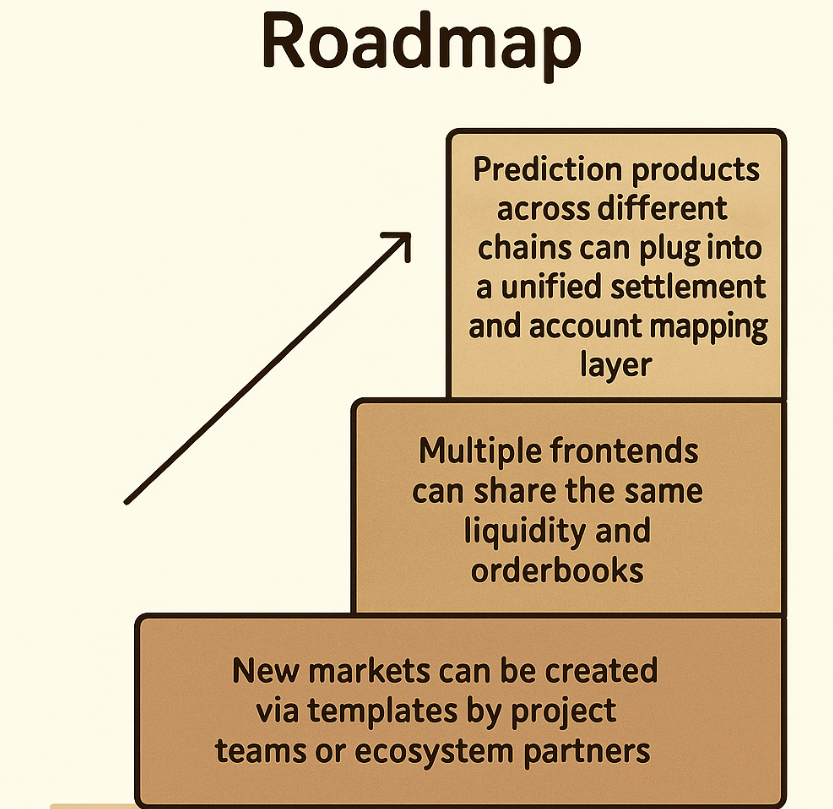
* New markets can be created via templates by project teams or ecosystem partners
* Multiple frontends can share the same liquidity and orderbooks
* Prediction products across different chains can plug into a unified settlement and account mapping layer
Ultimately, the goal is:
> **Make OrderbookTrade the shared matching & liquidity layer of the prediction ecosystem.**
***
### 9. **Conclusion**
Prediction markets are in the middle of a structural upgrade:
* From passive to **active, intelligent, composable** liquidity
* From isolated apps to **shared, cross-chain liquidity layers**
* From simple bets to **complex event portfolios, hedging, leverage, governance, and social use-cases**
Along this path, many toC platforms will appear, spike, and be replaced.
OrderbookTrade chooses a different position:
> **We sit at the infrastructure layer**
>
> **Helping anyone who wants to build prediction products ship faster and more safer .**
If you are:
* An L1 / L2 ecosystem looking for a flagship, narrative-strong application,
* A vertical prediction startup that wants to innovate on product, not infra
**this Litepaper is your starting point.**
The rest of our documentation will go deeper into:
1. Detailed system architecture and safety model
2. Pricing, leverage, and margin design
3. Case studies and launch templates
4. How to go from 0 → 1 using OrderbookTrade to power your own prediction product
> **We believe prediction markets will be to “uncertainty” what AMMs were to spot trading**
**OrderbookTrade is building the matching and liquidity brick !!!**